New Feature: Legendary Women of Jersey City
The Jersey City Landmarks Conservancy presents Legendary Women of Jersey City, a new and ongoing Instagram and online gallery that highlights the triumphs and legacies of local women over the last two centuries. View the galleries on this page or click on the Instagram link below for our Instagram platform.
Special thanks to Rachael Adriano for her digital design of the Jersey City Landmarks Conservancy’s special Legendary Women of Jersey City galleries.
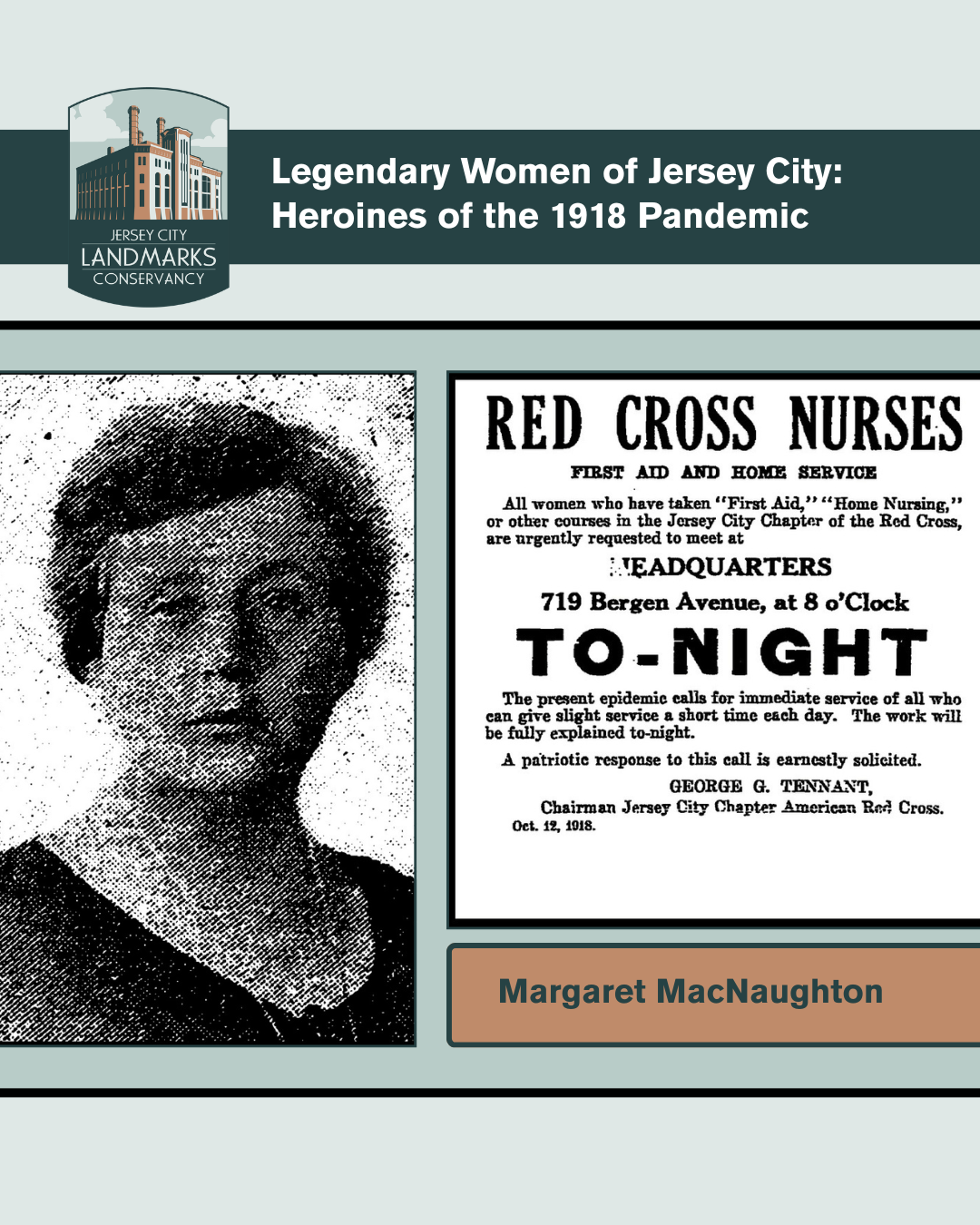
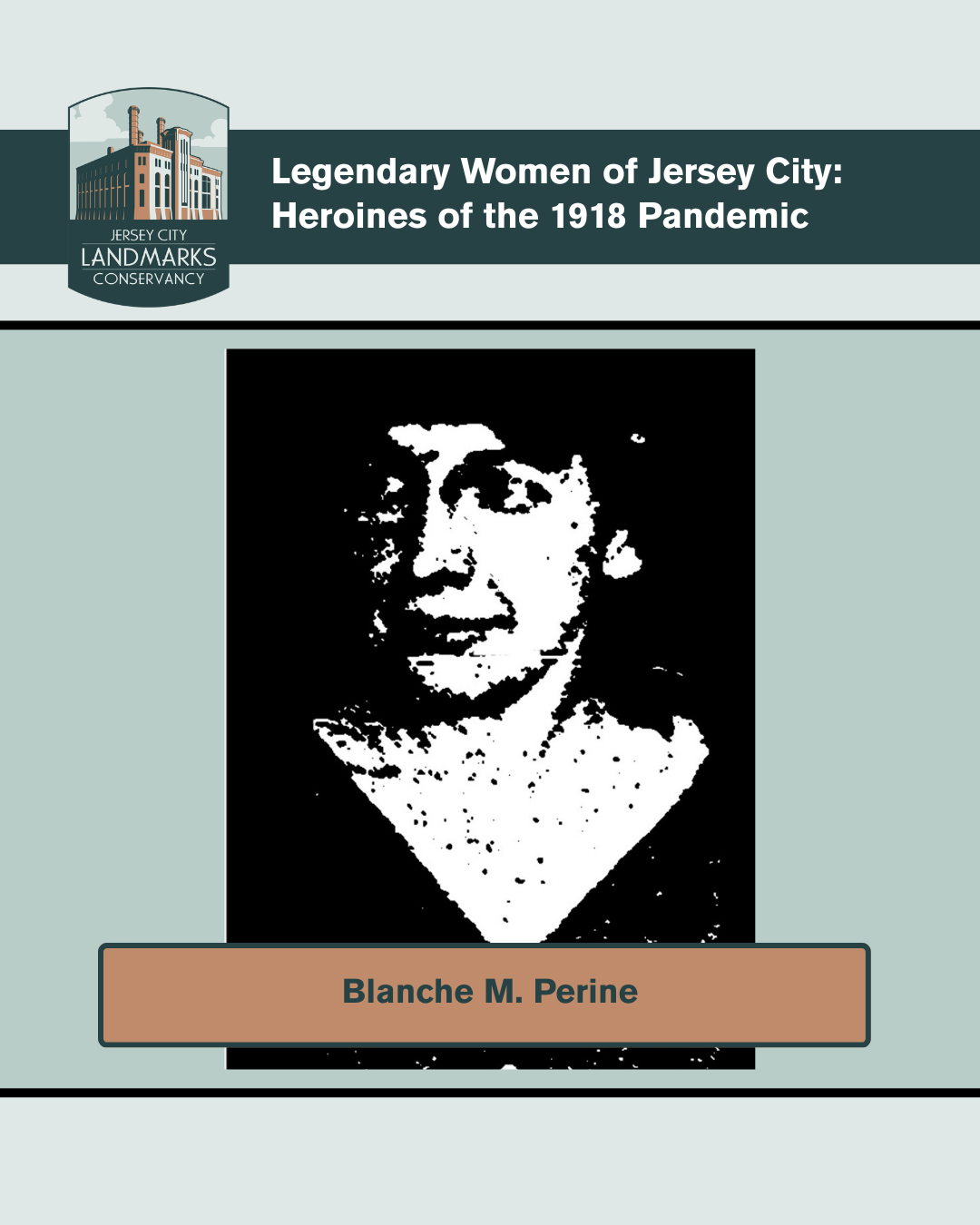
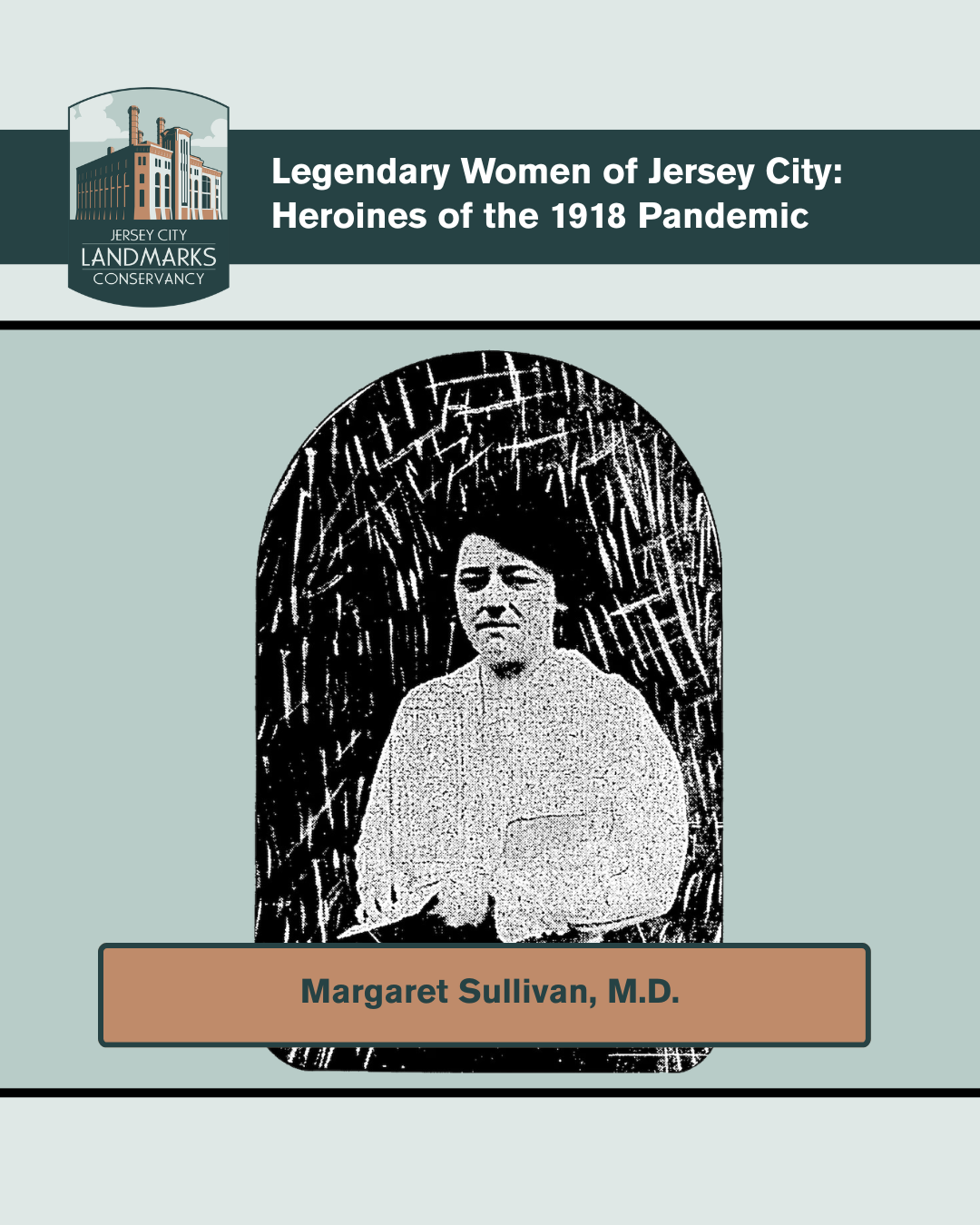
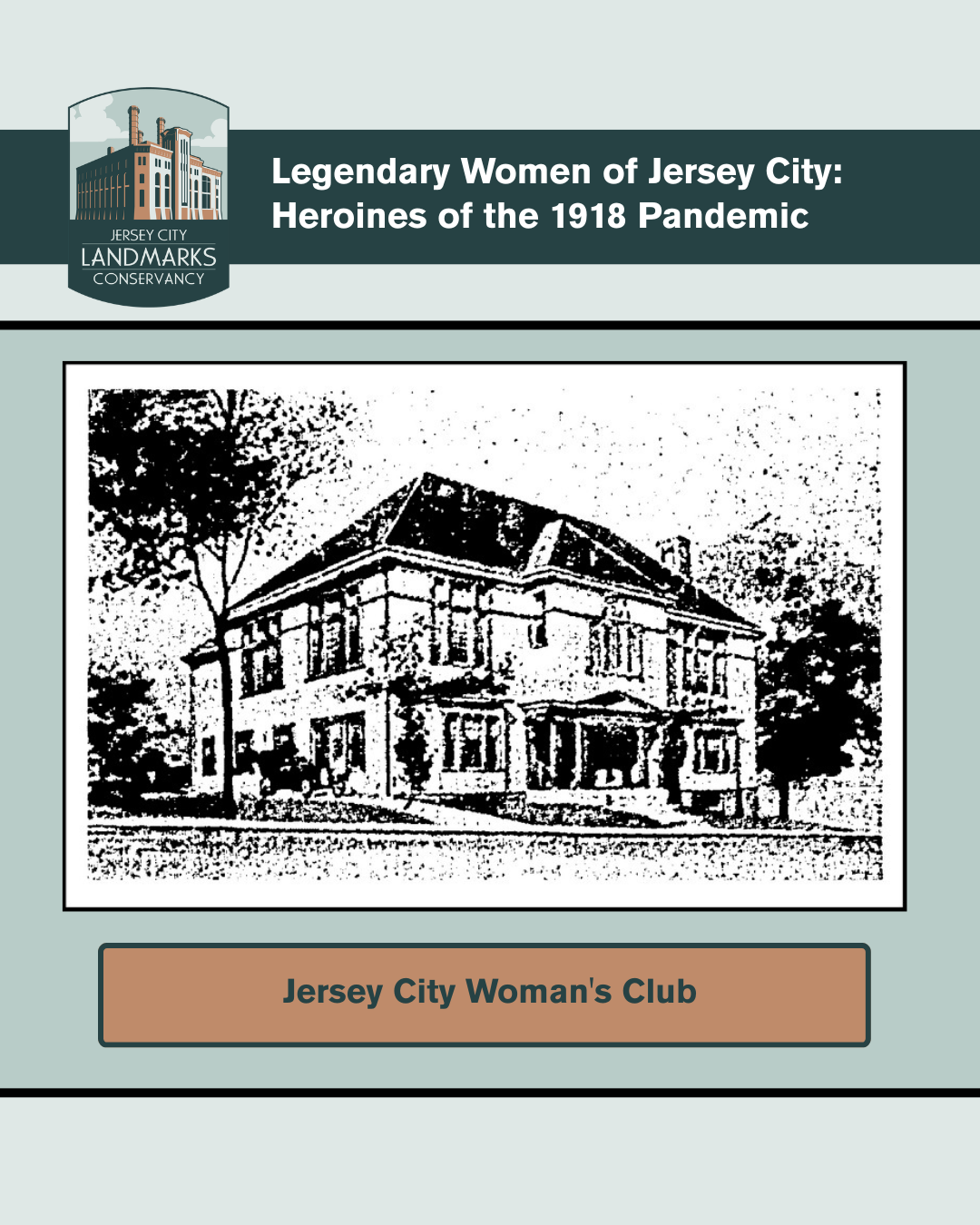
From the depths of the 1918 pandemic — known in history as the Spanish flu — emerged a host of Jersey City heroines missing now from the pages and plates of Jersey City's cultural annals. Leading this groundbreaking group was Margaret MacNaughton, RN, chair (c.1916-1922) of the Committee on Nursing of the Jersey City Chapter of the American Red Cross. As the Jersey City chapter’s most prominent nurse, MacNaughton, born and raised in Jersey City, used her connections with local civic groups to help widen the society’s communal reach during the pandemic. She was an immensely popular instructor and organizer of nurses-in-training and quickly assembled a stellar corps of nurse practitioners and medical assistants, using her professional background as an architect — a field dominated by males in the early-20th century — to create a solid structure of compassionate volunteerism. Blanche M. Perine, Social Worker and Executive Secretary of the Organized Aid Association in Jersey City, was a social worker of great energy, distinction and influence, and she was seen as a true warrior in the fight against the influenza pandemic that raged across the globe between the years1918-1920. (Tragically, Perine lost her life, at age 47, in an automobile accident in 1933, cutting short an incredible life of servitude.) Margaret Sullivan, M.D., was another pioneer in her time on many levels: first woman surgeon at the City Hospital in Jersey City; president of the Child Welfare Association; head of the city’s Milk Dispensary; and director, starting in 1915, on the Jersey City Board of Education — only the second woman appointed to that board. (Cornelia F. Bradford, Jersey City's world-renowned settlement house founder, was the first to hold that distinctive title.) In her capacity on the Board of Education in 1918, Dr. Sullivan pushed to have the public schools closed as the pandemic broke out as Jersey City Mayor Hague hesitated and wavered while more and more young students and teachers became sick or died. Dr. Sullivan weathered the storm with Hague due to her close working relationship with City Commissioner A. Harry Moore, who directly assisted her in establishing the Jersey City School for Crippled Children (now A. Harry Moore School) post-pandemic. Dr. Sullivan eventually could not work with Hague, and, in 1925, she withdrew from her City Hospital and Board of Education duties and began to focus primarily on her new school for children with special needs as well as establishing a private gynecological practice. Finally, the Jersey City Woman’s Club, located in the West Bergen section of Jersey City, became directly involved in the city’s women-directed medical and social responses to the pandemic. The club’s membership consisted of some of the city’s most prominent community organizers, advocates for the homeless, active environmentalists, architectural preservationists, dedicated educators, and staunch suffragists. In the time of the Spanish flu the club donated its large parlors, kitchens and halls to the local chapters of the American Red Cross. From the steps of the stately 1910 clubhouse on Fairmount Avenue, thousands of homemade masks were made available to medical establishments as well as to the public. Although lost to time, the Jersey City Landmarks Conservancy hopes these heroines of the 1918 pandemic will once more be celebrated and given the proper civic credit for saving precious lives in Jersey City at all costs. — Jersey City Landmarks Conservancy
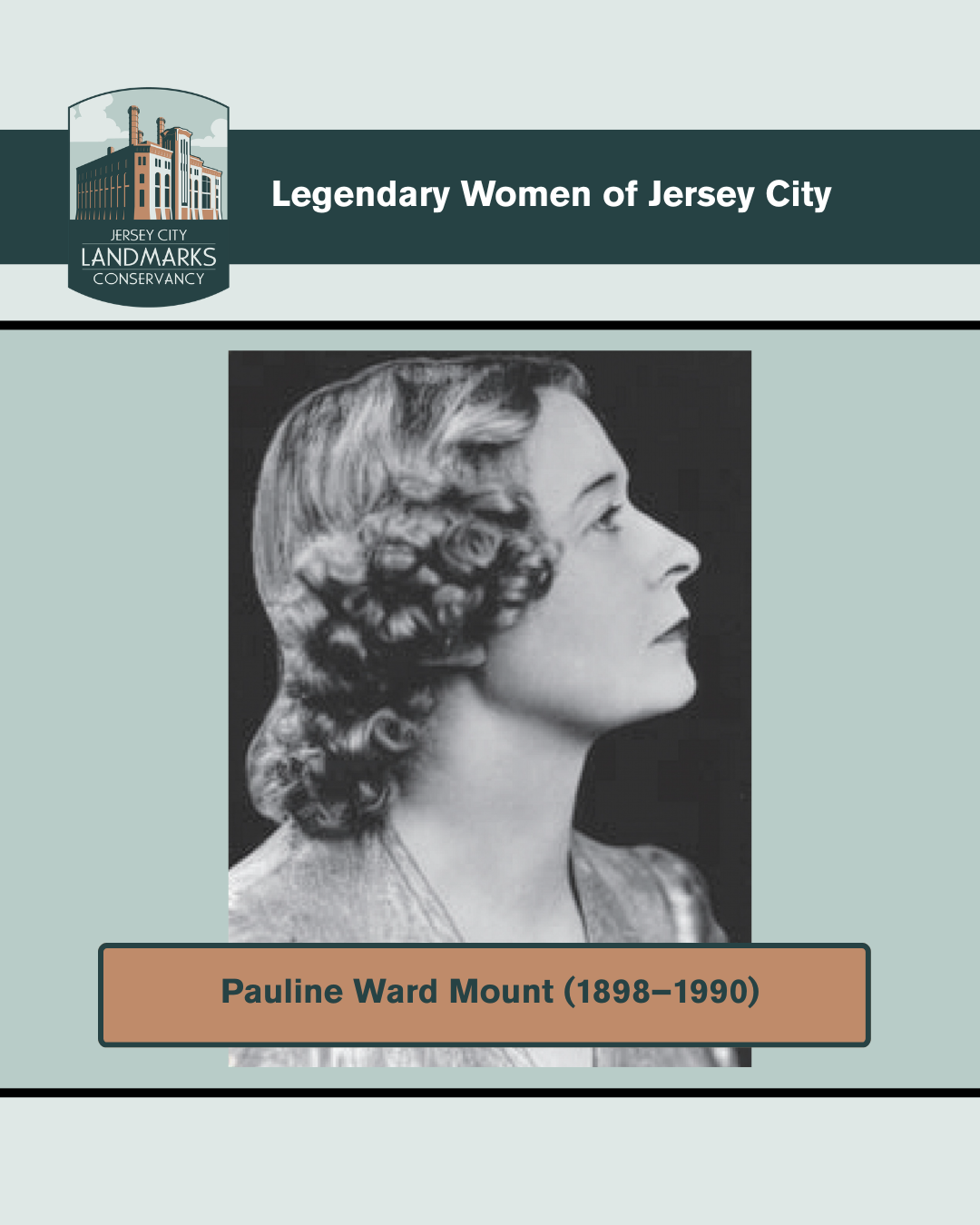
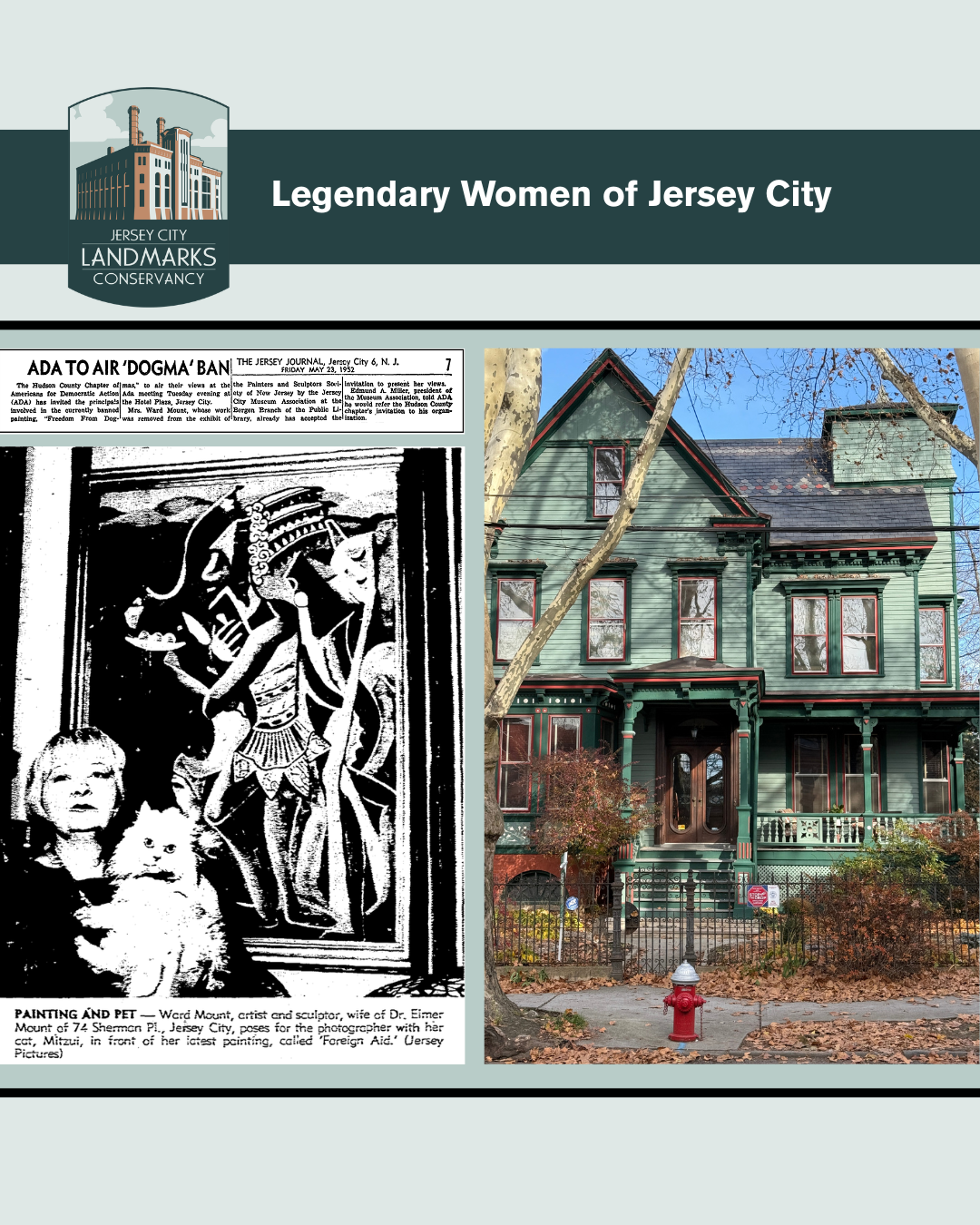
Pauline Ward Mount (1898-1990) was a giant in Jersey City’s early-20th-century art scene. Though largely forgotten by recent generations, her legacy as a painter, teacher, collector and advocate has recently started to make a comeback thanks primarily to the Museum of Jersey City History, a cultural institution working closely with her descendants to collect and display her work. Ward Mount's majestic Victorian mansion on Sherman Place in The Heights section of Jersey City — with its set-back 19th-century carriage house, expansive gardens, stone benches and great old-growth trees — is still occupied by the Mount family, who keep its attic galleries intact and its furnished rooms and chambers untouched. Born in upstate New York and raised in Flushing, Queens, Ward Mount moved to Jersey City in 1920 after marrying World War I lieutenant and medical officer Dr. Elmer Marshall Mount. In the 1930s she studied painting in the atelier of Albert P. Lucas (1861-1945), a Jersey City native and nationally renowned painter. According to her son, Dr. Marshall Mount (1927-2018) — a Columbia University graduate, modern African art authority, professor, and author of the classic African Art: The Years Since 1920 — Ward Mount was enthusiastic about all forms of art, including Impressionism and Cubism, two trends strongly synthesized in her own canon. In the early 1940s she became an instructor herself, offering courses at State Teachers College (now New Jersey City University and soon Kean Jersey City) as well as private lessons at home. “My mother was the most generous of teachers,” Dr. Mount once said, “who shared everything she knew, combined praise with gentle criticism, and helped creativity along with a glass of champagne.” Ward Mount founded the Painters and Sculptors Society of New Jersey and became known for curating groundbreaking annual exhibitions at the Bergen (now Edmund W. Miller) Library on Bergen Avenue — including one show where one of her own paintings, Freedom from Dogma, which depicted three nuns dressed in black, was deemed inappropriate by library officials and pulled off the wall. Ward Mount replaced the vacant spot on the wall with a strongly worded placard objecting to church-pressured censorship — a radical act that drew attention in the newspapers of the day. — Jersey City Landmarks Conservancy
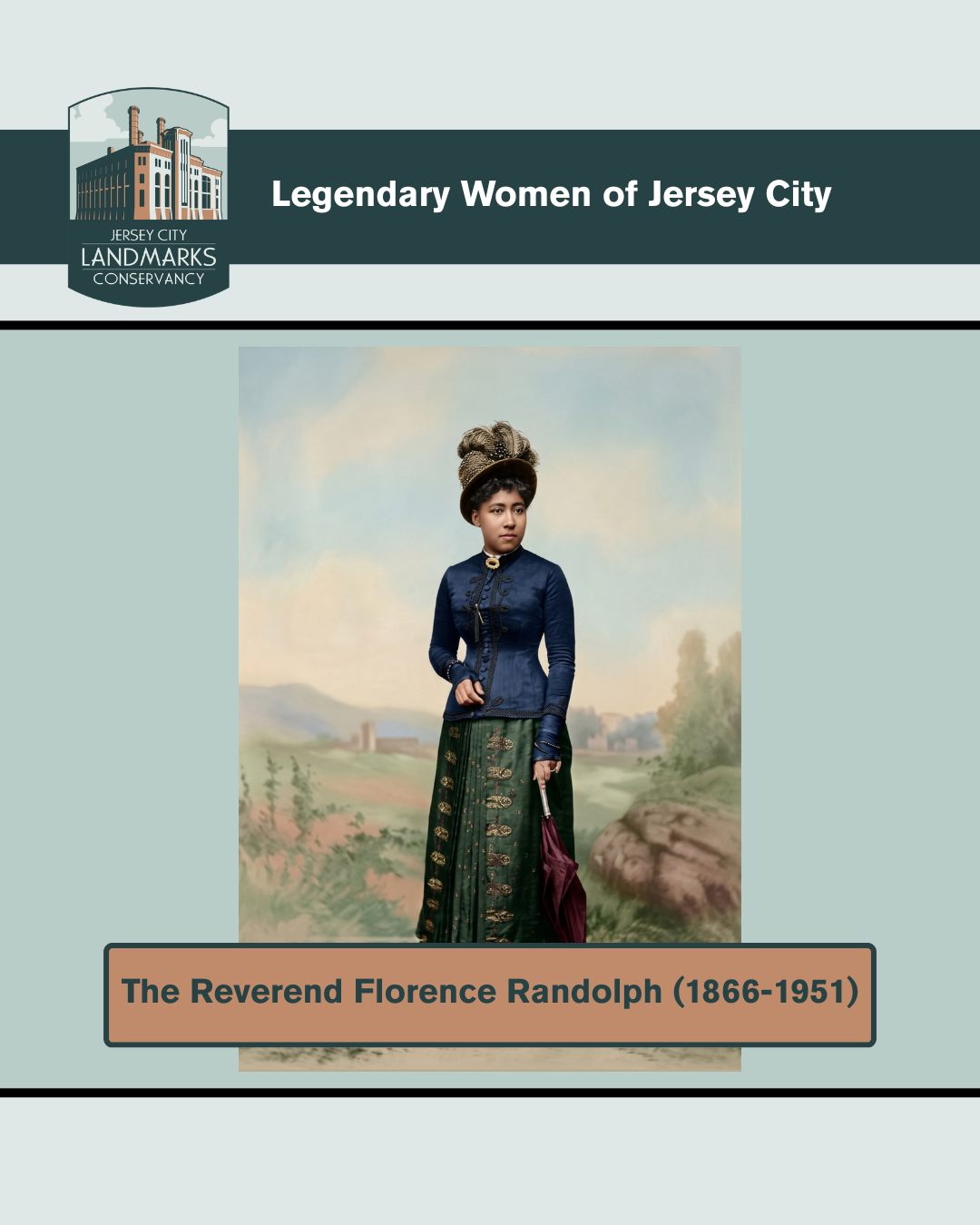
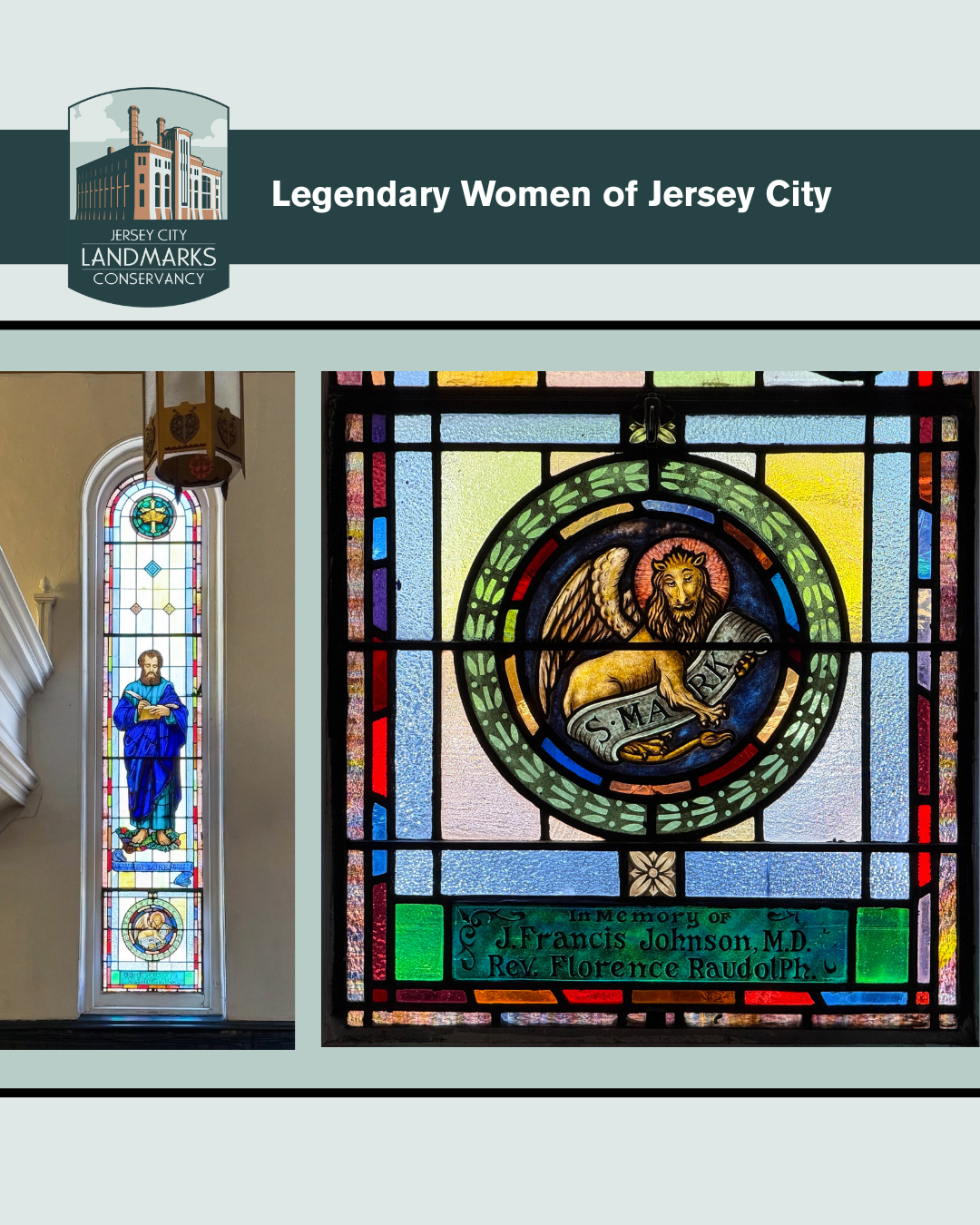
In 1913 Dr. George E. Cannon (1869-1925) — Jersey City's preeminent civil rights activist during the first two decades of the 20th-century — founded the Committee of One Hundred of Hudson County with a board of trustees consisting primarily of women. One of the most memorable members of the 100 was the Reverend Florence Randolph (1866-1951), an ordained woman minister in the African Methodist Episcopal Zion Church and a Jersey City resident who involved herself in almost every Black-led initiative. The Rev. Randolph was charismatic and compassionate toward all who met her and developed close bonds with other activist faith leaders. She was a constant and avid participant in Christian endeavor societies, a regular guest preacher in houses of worship in Jersey City and beyond, and a vocal critic of the mistreatment of young Black girls in local training schools. She established and presided over the New Jersey State Federation of Colored Women's Clubs (1915) — a crowning, lasting civic achievement — and often traveled to Liberia to assist in vital mission work. An inspirational figure in Dr. Cannon's social justice circle, her presence — though seemingly forgotten today — is sensed strongly in the fields of a stained glass memorial window at Lafayette Presbyterian Church (now Orient Church of God) at Ivy Place, Summit Avenue, and Cornelison Avenue in Jersey City. — Jersey City Landmarks Conservancy
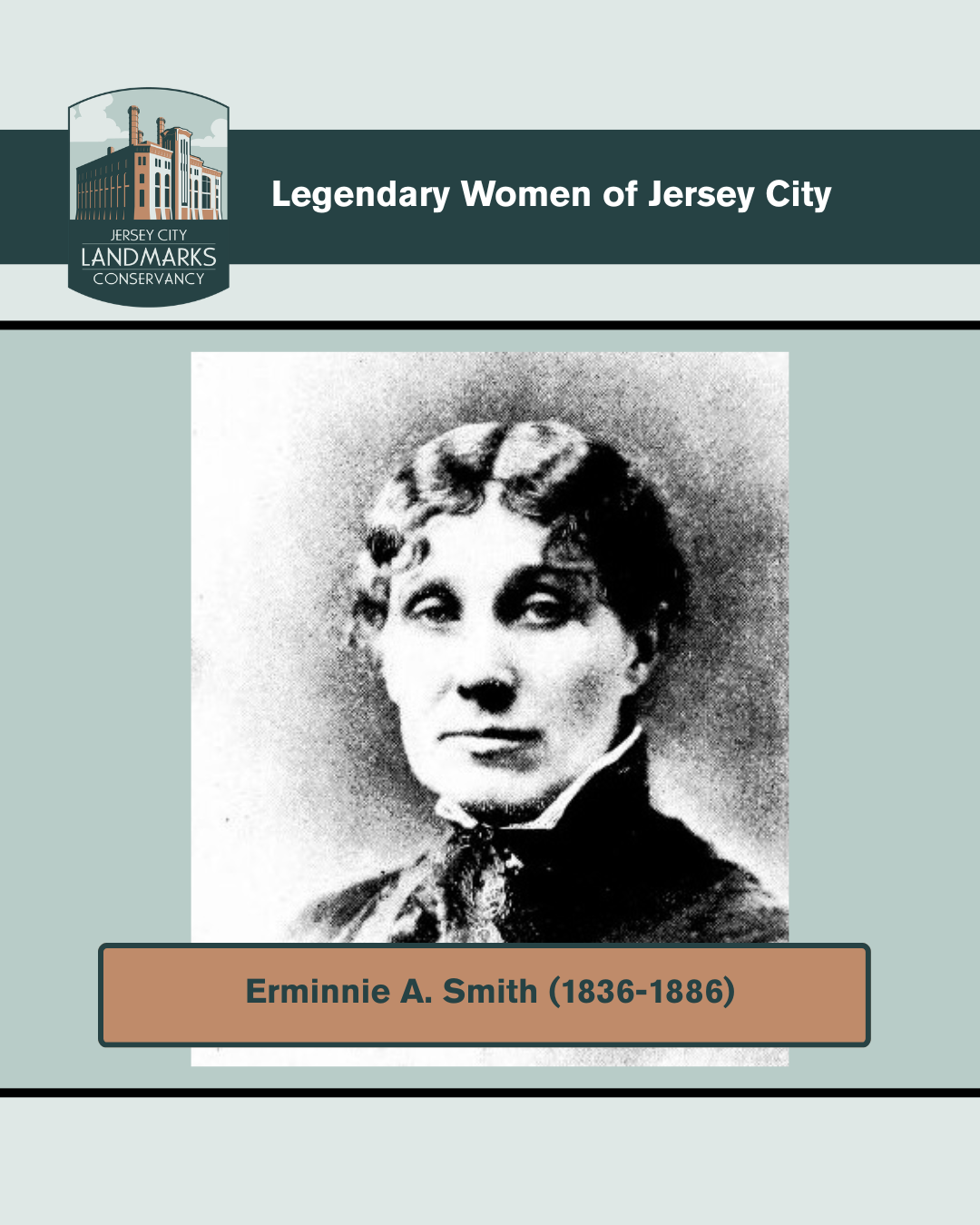
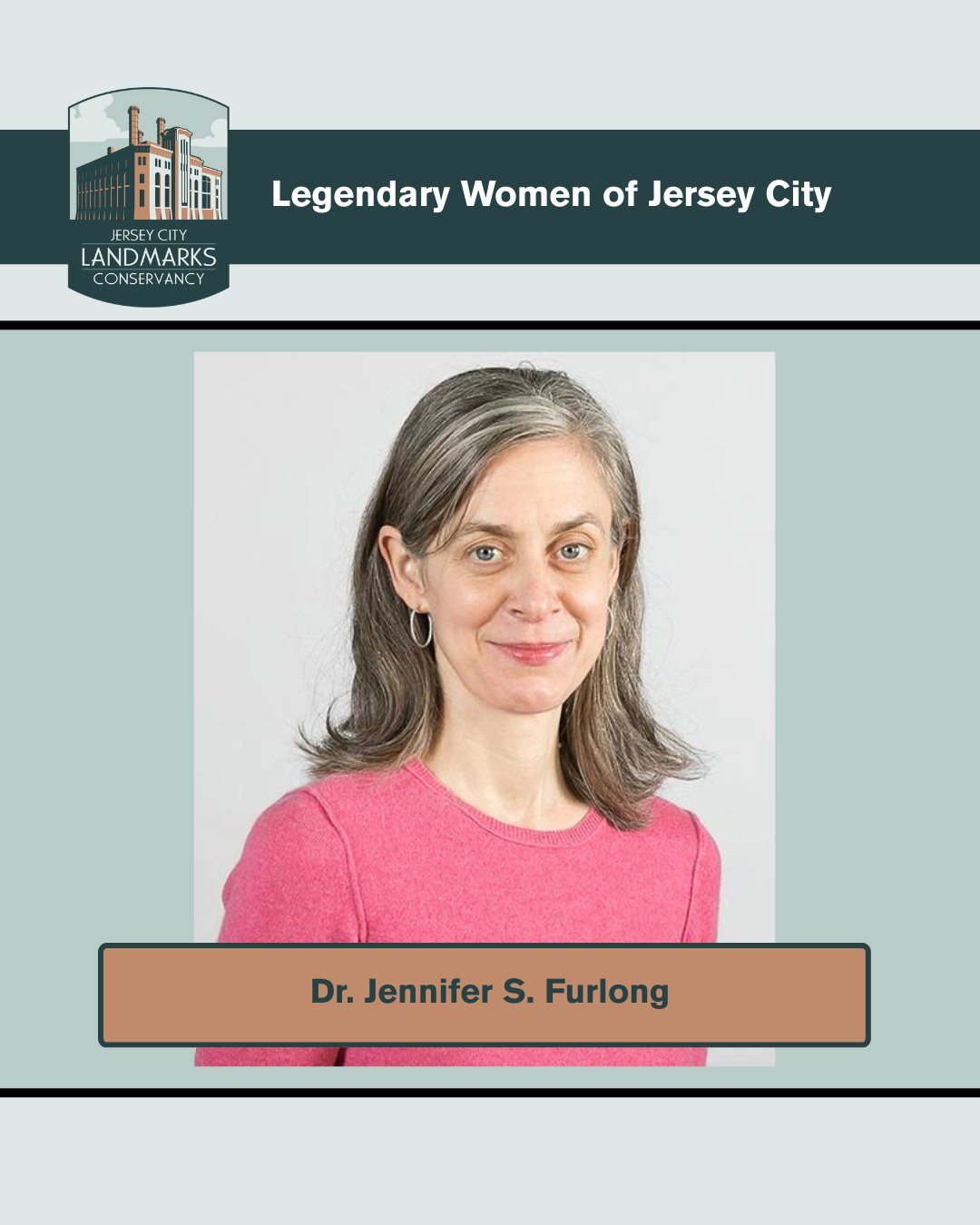
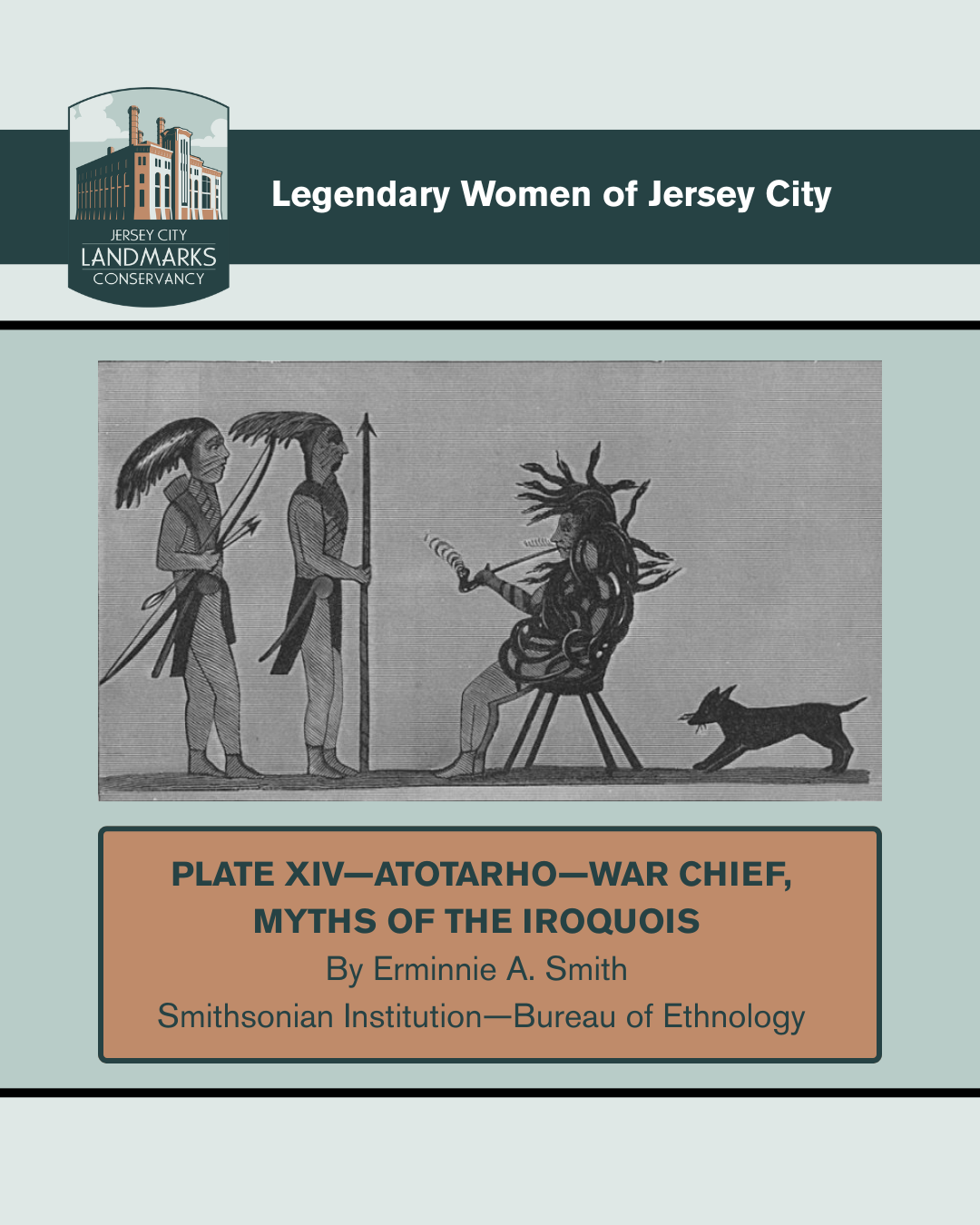
One evening, years ago, while volunteering in The New Jersey Room on the third floor of the Jersey City Free Public Library on Jersey Avenue, in Downtown Jersey City, Dr. Jennifer S. Furlong, a resident of the city’s historic Lafayette neighborhood, came across a vertical file on Erminnie A. Smith (1836-1886), a prominent 19th-century ethnologist, geologist, and founder, in 1876, of the Aesthetic Society of Jersey City, a cultural salon she ran out of her Pacific Avenue parlors. (Her mansion still stands, though hidden behind a grocery store.) In Erminnie Smith, Dr. Furlong found an inspiring pioneer: first woman to be published in Science and first to become secretary of the male-dominated American Association for the Advancement of Science; expert on the Iroquois, with whom she lived and studied, fluently learning their tongues and customs; friend of invited Aesthetic Society guests Thomas Edison and Oscar Wilde; and namesake of a perpetual — even to this day — Vassar College geology scholarship. Through her ongoing scholarship on Smith, Dr. Furlong, the Director of Career Planning and Professional Development at the CUNY Graduate Center and a longtime trustee of the Jersey City Landmarks Conservancy, is introducing today’s public to one of Jersey City’s greatest intellectuals and humanitarians of international reach and renown. — Jersey City Landmarks Conservancy
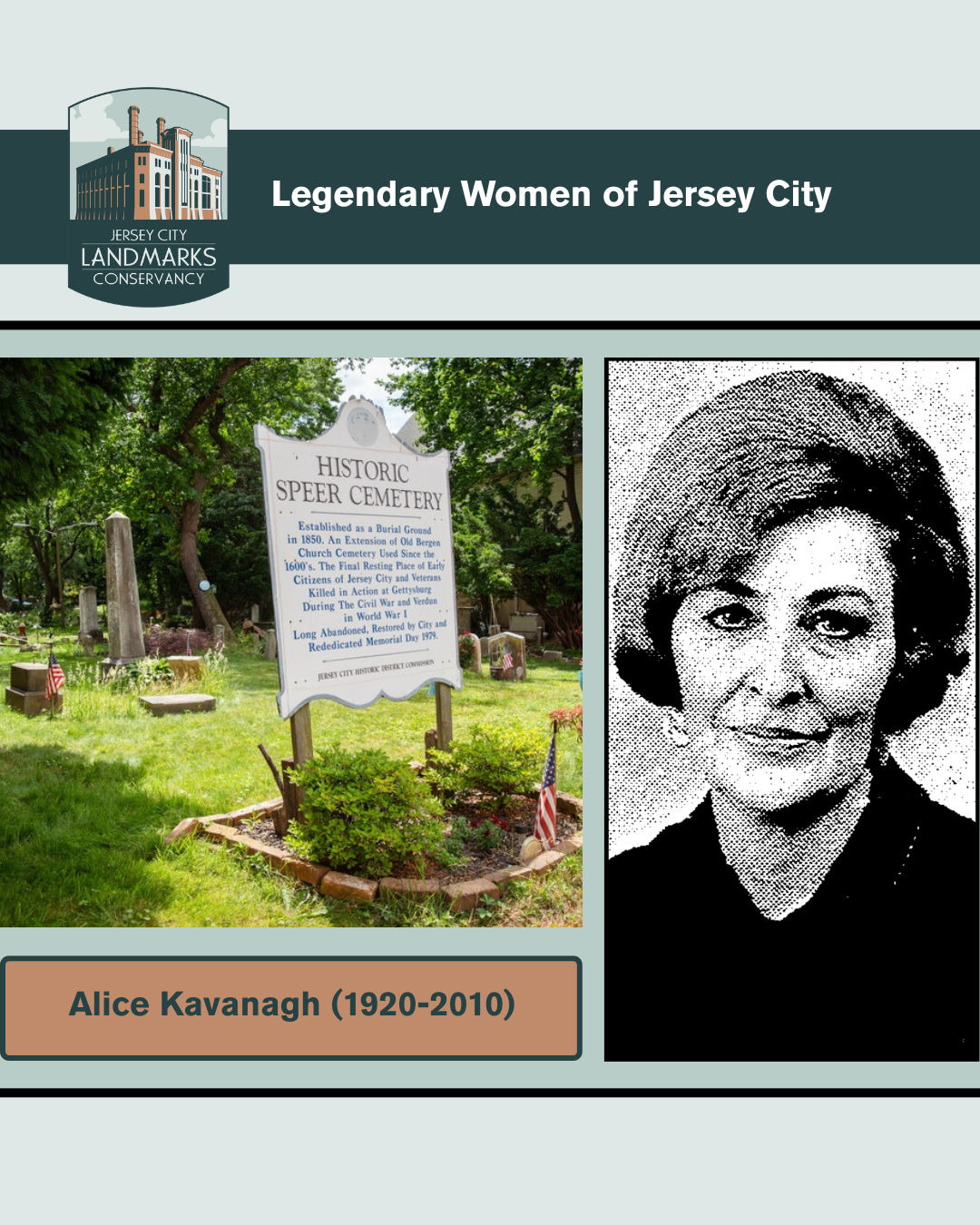

When City Hall announced in 1970 that ancient burial vaults and stone monuments in the 2-acre Speer Cemetery — located on Vroom Street in the Bergen Square section of Jersey City and, at over 300-years-old, regarded as one of New Jersey's oldest burial grounds — would be cleared to make way for a 134-spot municipal parking facility, AliceKavanagh (1920-2010), a nearby resident barely known to the public, suddenly stood up to protest against the parade of Journal Square-area shop owners openly calling for the tucked-away heritage site to be bulldozed in the name of progress. Believing it was a done deal, they and their allied elected officials were suddenly caught off guard by the lone yet powerful presence of this “dynamic speaker”— as the newspaperes described her — from around the corner. Kavanagh immediately formed the Save Historic Speer Cemetery Committee, which was comprised of like-minded preservationists, veterans' organizations, local students, and even living descendants of the long-interred. To counter the fast-tracking plans to destroy the sacred grounds, Kavanagh and her impassioned committee organized overnight petition drives, provided daily talking points to reporters, wrote guest editorials, thronged public meetings, gathered support from high-ranking politicians, and cleaned up the neglected and vandalized urban cemetery with its toppled perimeter fence and desecrated headstones. “We are appalled at the thought of the horrendous desecration and disturbance of this burial ground for mercenary purposes,” the Save Historic Speer Cemetery Committee stated in The Jersey Journal. “We feel the site is deeply imbedded in the historical tradition of this country and that it should be rehabilitated and preserved as a graveyard for all time.” These powerful wordsstopped the paving project in its tracks, with City Hall capitulating and shopkeepers resigning themselves to the fact that customers would need to continue using public transportation to reach their storefronts and showrooms. Kavanagh's resolve and impenetrable belief in her preservation convictions have shielded Speer Cemetery from subsequent development and destruction attempts ever since, and today The Friends of Speer, a citizen-empowered historic preservation organization under the leadership of Jennifer King, keeps Kavanagh's image and legacy alive by caring year-round for the grounds and offering special public programming and events that honor the site. — Jersey City Landmarks Conservancy